
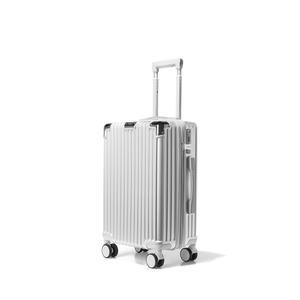
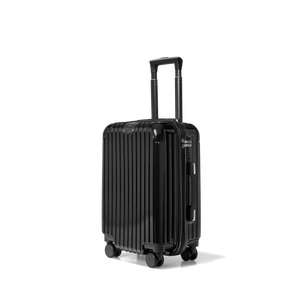
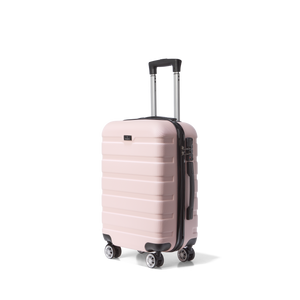
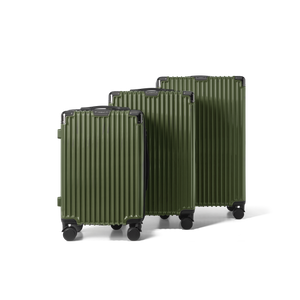

Are you torn between a hard-shell or soft-shell suitcase? Then the choice mainly comes down to protection versus flexibility. A hard-shell suitcase is usually better for air travel, checked luggage, and fragile items. A soft-shell suitcase, on the other hand, is more practical if you often travel by car, train, or bus and like to have a little more wiggle room when packing. So which option is best depends on your travel style, luggage, and destination.
The main differences at a glance
People searching for "hard-shell suitcase" or "soft-shell suitcase" usually want to know right away which type is a better fit. Here are the main differences.
| Component | Hard-sided suitcase | Soft-sided suitcase |
|---|---|---|
| Protection | More dimensionally stable and more impact-resistant | Less protection against pressure or impact |
| Flexibility | Doesn't offer much | Fits more easily in tight spaces |
| Weight | It may be slightly heavier, depending on the material | Often feels lighter and more supple |
| Ease of Use | Neater interior, easy to clean | Often external compartments and sometimes expandable |
| Weather Resistance | Generally more resistant to splashes | Textiles absorb moisture more quickly |
| Best for | Airplane, checked baggage, fragile items | Car, train, bus—pack flexibly |
Are you mainly concerned about the weight? Check out our guide to choosing the best lightweight suitcase for tips on how to compare options effectively.
When a Hard-Shell Suitcase Is the Smartest Choice
A hard-shell suitcase is usually the best choice if your luggage is checked or if you fly frequently, and often also if you’re looking for the best suitcase for a long-distance trip. At airports, suitcases are stacked, moved around, and sometimes handled a bit roughly. A hard shell helps protect your clothes, shoes, and fragile items better. The contents also tend to stay more neatly in place because the suitcase retains its shape.
In addition, a hard-shell suitcase is often easier to clean after rain, dust, or contact with a dirty conveyor belt. Keep in mind the drawbacks, though: it doesn’t give as much when packed tightly in a trunk, and superficial scratches are more visible. If you’re primarily looking for protection, organization, and a sleek look, a hard-shell suitcase is often the smartest choice. This also aligns well with the collection at Voyagoux, where design and practical travel features come together.
When a soft-sided suitcase is more convenient
A soft-sided suitcase is especially handy if you travel often by car, train, or bus. Because of its more flexible material, it fits more easily between other bags or in a tight trunk. Soft-sided suitcases are also often convenient when you want to quickly grab something while on the go, such as from an outside pocket.
For travelers who want a little more flexibility when packing, a soft-sided suitcase can be very practical. On the other hand, a soft-sided suitcase offers less protection against hard impacts and is usually harder to clean. If you’re bringing fragile items or your suitcase will often be checked, a hard-sided suitcase is usually safer.
What works better as carry-on luggage?
For anyone looking for the answer to the question of what the best carry-on suitcase is, the choice depends on what you’re bringing with you. If you’re bringing a laptop, toiletries bag, or other items you want to protect well, a compact hard-sided suitcase is often a better choice. It holds its shape better and helps you keep your luggage organized. If, on the other hand, you want to be able to easily grab documents, a sweater, or small travel items, a soft-sided suitcase or travel bag might be more convenient.
When packing carry-on luggage, always check your airline’s current size and weight restrictions. These vary by airline and are subject to change. No matter whether you choose a soft-sided or hard-sided suitcase, always check in advance to make sure it meets the carry-on requirements.
What should you look for when buying a hard-shell or soft-shell suitcase?
Type of Trip and Baggage Handling
First, ask yourself how you usually travel. For air travel and checked luggage, protection is more important. For road trips and short trips, flexibility is often a higher priority.
Weight and Size
A larger suitcase isn’t always the smartest choice; a suitcase size guide will help you choose the right size. Airlines have strict limits on dimensions and weight. A lightweight suitcase helps you maximize your usable luggage space. Not sure which size to choose? Read our guide on choosing a medium or large suitcase for clear guidance.
Layout and Ease of Use
Consider the compartment layout, the choice between 4 wheels or 2 wheels, the pull handle, and the lock. Many travelers find that a well-organized interior and smooth-rolling wheels offer the most convenience. If you travel internationally on a regular basis, a TSA lock is often a practical extra. If you’re buying online, be sure to check for clear product specifications, return policies, and warranty information.
Zipper or snap closure: which should you choose?
When deciding between a hard-shell or soft-shell suitcase, there’s often a second choice to make: zipper or fixed closure. A zipper suitcase is usually lighter and often slightly more flexible to use. That’s handy if you want to travel practically. A model with a fixed closure or frame often feels sturdier and more rigid, but offers less give. So there’s no one-size-fits-all best option. The smartest choice depends on your travel habits, your preference for convenience, and how much protection you want. See also: Suitcases with or without zippers.
Frequently Asked Questions About Hard-Shell and Soft-Shell Suitcases
Is a hard-shell suitcase always heavier than a soft-shell one?
No. It depends on the material and the size. Modern hard-shell suitcases can be surprisingly light, while some soft-shell models actually end up weighing more because of their compartments, reinforcements, and expandable sections.
Can a soft-sided suitcase be checked as luggage?
Yes, that's possible. A soft-sided suitcase is just less ideal if you need a lot of protection. That's usually not a problem for clothes, but for fragile or delicate items, a hard-sided suitcase is generally safer.
Which suitcase is better for air travel?
For air travel, a hard-shell suitcase is usually the best choice, especially if you're checking your luggage. The hard shell offers more protection against bumps, pressure, and rough handling at the airport.
Which suitcase ranked highest in tests?
That depends on the time of the test and the evaluation criteria. So don't just look at a single test result; also consider the weight, material, layout, warranty, and how well the suitcase suits your travel style.
If you're thinking about buying a hard-shell or soft-shell suitcase, don't start by considering color or size—start by thinking about the type of trip you'll be taking. If you travel by plane often and want more protection, a hard-shell suitcase is usually the best choice. If, on the other hand, you're looking for flexibility and convenience while traveling, a soft-shell suitcase is a better fit.