
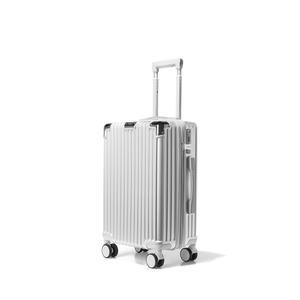
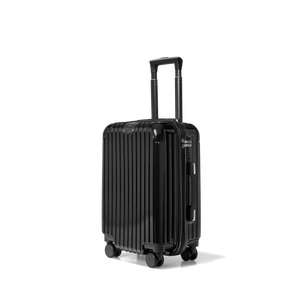
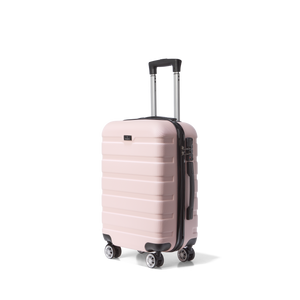
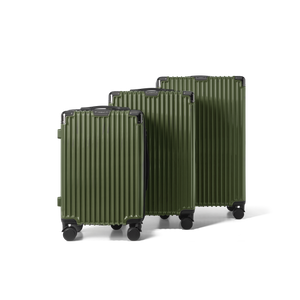

Are you torn between a medium-sized and a large suitcase? Then the choice usually comes down to three things: how long you’ll be away, how much you’re actually bringing, and what baggage rules your airline has. For a trip lasting about one to two weeks, a medium-sized suitcase is often the most practical choice. If you’re going away for longer, packing winter clothes, or sharing a suitcase with someone else, a large suitcase usually offers more convenience. Don’t just look at the size label—pay close attention to the height in centimeters, the capacity in liters, and the maximum baggage weight.
What Your Choice Really Depends On
Choosing the right suitcase size makes traveling much more comfortable. You want to have enough space without having to travel with unnecessary bulk or extra weight. So be sure to keep these points in mind:
- Duration of the trip—the longer you're away, the faster you'll move toward large-format photography.
- Type of trip—a beach vacation requires less space than a winter trip or a road trip.
- Your packing style—if you pack compactly, you can often get by with fewer liters.
- Alone or together—if you're sharing a single suitcase, extra space is often welcome.
- Airline Policies - Each airline has different size and weight limits for checked baggage.
Important to know: There is no completely fixed standard for what exactly constitutes “medium” or “large.” A 75-cm suitcase might still be classified as medium by one brand but considered large by another. Therefore, always compare the product specifications and consult the overview of suitcase sizes.
Medium or large suitcase at a glance
| Format | Approximate measurement | Contents | Often goes well with | Point to Note |
|---|---|---|---|---|
| Medium-sized suitcase | approx. 65 to 75 cm | approx. 60 to 90 liters | Trips lasting 1 to 2 weeks | A nice balance between space and maneuverability |
| Large suitcase | approx. 75 to 87 cm | about 90 liters or more | Trips lasting 2 to 3 weeks, winter vacations, or family use | Gaining Weight Faster When Flying |
Do you see a suitcase that’s 69 cm or 75 cm? If so, you’re right in the range where sizes can overlap. In that case, don’t just look at the height—also check the capacity in liters and the empty weight.
Choose the medium size if you want to travel smart without lugging things around
For many travelers, medium-sized suitcases are the safest choice. This size is usually spacious enough for one- to two-week vacations without the suitcase feeling too bulky or heavy. You’ll generally have enough room for clothes, shoes, toiletries, and an extra layer for cooler evenings. At the same time, a medium-sized suitcase is often easier to lift into a car, up stairs, or off the baggage carousel.
Another practical consideration: with a medium-sized bag, you often have better control over the total weight. That’s especially nice when you’re flying and don’t want any surprises at the check-in counter. If you travel in style but efficiently, this is often the size that best combines comfort, style, and ease of use.
Choose a larger vehicle if space is more important than traveling compactly
Large suitcases are especially handy if you’re going away for a longer period or simply need more space. Think of trips lasting several weeks, vacations with thick sweaters and coats, or a trip where you’re packing for two people. For families or long-distance destinations, a large suitcase also often makes packing less stressful: you don’t have to cram things in as much, and it’s easier to keep track of everything.
Keep in mind that extra space isn’t the same as extra weight allowance. Many airlines still have a 23-kg limit for a single piece of checked luggage. So a large suitcase is a smart choice only if you really make the most of its capacity—but you’ll need to pack thoughtfully. Otherwise, you might end up paying for excess weight or simply bringing more than you need. If you want to estimate how many liters fit in approximately 25 kg, check out “25 kg Suitcase: How Many Liters?”
How big does your suitcase need to be for 23 kg?
A 23-kg limit doesn’t automatically require a single, fixed suitcase size. That weight depends just as much on what you pack as on the suitcase itself. Heavy shoes, toiletries, and winter clothing take up fewer liters but add up quickly in kilograms. Light summer clothing, on the other hand, takes up a lot of space without easily pushing the weight toward 23 kg.
In practice, a large suitcase is often more convenient if you’re close to 23 kg, because you can distribute the contents more evenly. However, a medium-sized suitcase can also reach 23 kg if you pack compactly and with heavy items. So always check three things: the suitcase’s empty weight, its capacity in liters, and your airline’s current baggage rules. A luggage scale is a useful tool for this. Want to know more? Read “23 kg Suitcase: What Size Do You Need?”
Frequently Asked Questions About Medium and Large Suitcases
Is a suitcase that is 69 or 75 cm tall considered a medium-sized or large suitcase?
A suitcase measuring 69 cm is usually classified as medium or medium-large. At 75 cm, you’re often right on the borderline. Some brands still call that medium, while others already classify it as large. That’s why you should always check the capacity in liters, not just the dimensions in centimeters.
What is a good size for a suitcase?
The right size is the one that suits the length of your trip, your packing style, and your mode of transportation. For many one- to two-week vacations, a medium-sized suitcase is ideal. For longer trips, winter clothing, or shared luggage, a large suitcase is often more practical.
What is a medium-sized suitcase?
A medium-sized suitcase is usually a checked luggage suitcase that is about 65 to 75 cm tall, with a capacity of roughly 60 to 90 liters. This size is popular for vacations lasting one to two weeks and offers a good balance between space and portability.
Can I bring a medium or large suitcase as carry-on luggage?
No, not in most cases. Medium and large suitcases are intended for check-in luggage. Carry-on luggage has much smaller maximum dimensions, depending on the airline. Therefore, always check the rules of the airline you’re flying with.
Besides size, what else do you look for?
If you fly often, pay attention to the empty weight, the quality of the wheels, a sturdy pull handle, the interior layout, and a TSA lock. A hard-shell suitcase is often a good choice for checked luggage because it better protects the contents and the exterior is easy to keep clean.
How can you avoid extra costs when flying?
Before you leave, always check the allowed dimensions and maximum weight for your ticket type. Weigh your suitcase at home and factor in any souvenirs or purchases you might make on the way back. A large suitcase, in particular, is more likely to exceed the limit if you fill it to capacity.
To make sure you’re making the right choice, always compare the dimensions, capacity, and empty weight of the suitcase before you order—especially if you’re deciding between individual models and suitcase sets. That way, you’ll travel more comfortably, more stylishly, and with fewer unpleasant surprises along the way.