 Excellent 4.5 | 3,000+ customers
 WebwinkelKeur



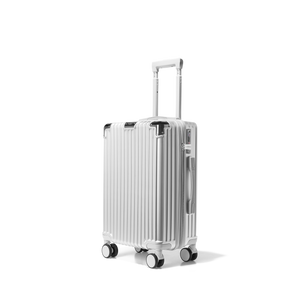
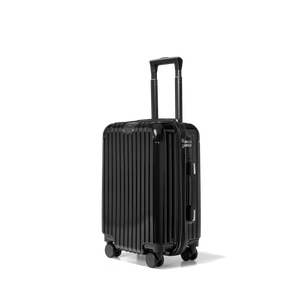
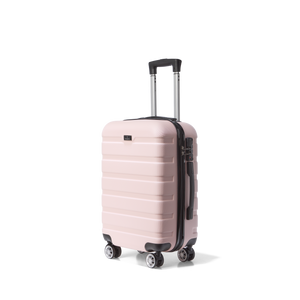
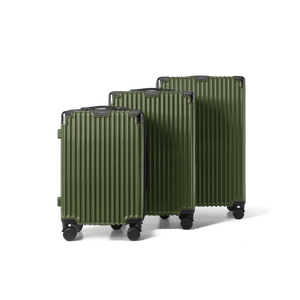

The best lightweight suitcase isn’t usually the lightest model you can find, but rather the one that’s lightweight without compromising on sturdiness, smooth rolling, and ease of use. For most travelers, that’s a hard-shell suitcase with four smooth-rolling wheels, a TSA lock, and a size that suits the length of the trip. If you base your choice solely on low empty weight, you run the risk of a wobbly handle, less stable wheels, or a shell that shows signs of wear more quickly. To choose a good lightweight suitcase, pay close attention to the material, size, interior layout, and how often you’ll be traveling with it.
When Lightweight Really Makes a Difference
You really appreciate a lightweight suitcase when every kilo counts. Think about flying with strict baggage limits, transferring trains at stations, carrying a suitcase up stairs, or packing a car efficiently for a vacation. The lighter the suitcase itself, the more kilos you have left for clothes, shoes, and souvenirs.
Still, a lightweight suitcase is especially valuable only if the rest of the suitcase is up to par. A model that’s 500 grams lighter but doesn’t roll as smoothly or doesn’t close as well often feels less comfortable in practice. The best choice, therefore, is a balance between low weight, smooth-rolling wheels, a reliable shell, and ample storage space.
What is a lightweight suitcase?
A lightweight suitcase is one that weighs relatively little for its size. There is no official threshold, but in practice, you can use the guidelines below as a reference. Think of them as useful ranges, not strict rules. After all, materials, construction, and additional features all affect the final weight.
| Format | Contents | Curb Weight | Often goes well with |
|---|---|---|---|
| Carry-on luggage | 30–45 liters | approx. 1.8–2.8 kg | 2–4 days |
| Medium-sized | 55–75 liters | approx. 2.8–3.8 kg | 5–10 days |
| Big | 75–100 liters | approx. 3.5–4.8 kg | 1–3 weeks |
| Extra large | 100–120 liters | approx. 4.2–5.5 kg | Long trip or family |
So if you’re looking for the best lightweight suitcase for checked luggage, you’ll usually end up with a large suitcase that weighs around 3.5 to 4.5 kilograms when empty. Anything significantly lighter than that might seem appealing, but be sure to check extra carefully how sturdy the handle, zipper, and wheels are—especially if you’re looking for a suitcase for a long trip.
Hard case or soft case—which is better?
For air travel, a hard-shell suitcase is the safest choice for many people. A hard shell provides better protection for the contents against pressure and impacts, is often more resistant to moisture, and helps the suitcase retain its shape better. This offers extra peace of mind, especially if you’re packing electronics, shoes, or fragile items.
A soft-sided suitcase has its own set of advantages. Soft-sided suitcases are often flexible, may have practical exterior pockets, and are convenient for car or train trips where you want to fit your luggage more easily. Some soft-sided suitcases are also very lightweight, but generally offer slightly less protection than a sturdy hard-sided suitcase.
If you're looking for the best all-around lightweight suitcase, a lightweight hard-shell suitcase is the top choice for most travelers. If flexibility and exterior pockets are your main priorities, a soft-shell suitcase might be a better fit. The smartest choice, then, depends on your travel style—not just on the label indicating the weight in kilograms.
What materials make a suitcase lightweight?
Polypropylene
Polypropylene is one of the most popular materials for lightweight hard-shell suitcases. It is relatively lightweight, durable, and well-suited for travelers looking for a good balance between weight and everyday use. For many vacations and frequent air travel, this is a very logical choice.
Polycarbonate and ABS blend
Polycarbonate is known for its sturdy, premium look and good impact resistance. ABS or an ABS blend is more commonly found in more affordable models. That may be perfectly fine for occasional use, but such suitcases sometimes feel less refined or flexible than higher-end models. Therefore, don’t just compare the material on paper—also consider the overall finish of the suitcase.
Woven composites
In the higher-end segment, you’ll also find woven composites. These are often very lightweight yet strong, but they’re usually significantly more expensive. If you travel frequently, check your suitcase regularly, and want to minimize its weight as much as possible, this type of material might be worth considering. For the average vacationer, a well-made polypropylene or polycarbonate suitcase is often more than enough.
Which size is right for your trip?
The best size isn’t necessarily the largest one. Many travelers buy an extra-large suitcase just to be safe and then pack it so full that they end up exceeding the baggage limit more quickly. For flights with a checked baggage allowance of 20 to 23 kilograms, a large suitcase of about 75 to 95 liters is often more practical than a very large model of over 100 liters.
If you’re going away for a week, a medium-sized suitcase is usually enough. For a vacation of two weeks or longer, a large suitcase makes more sense. If you’re traveling as a couple or with your family, it’s a good idea to consider not only the capacity but also how smoothly the suitcase rolls when loaded. A suitcase with a large capacity but mediocre wheels feels heavy, even if it weighs very little when empty. Not sure which size is right for you? Check out the suitcase size guide.
What else should you look for besides weight?
Wheels that roll smoothly and steadily
Four good wheels make a suitcase noticeably easier to use. Dual spinner wheels often provide more stability, especially at airports and on slippery floors. Don’t just look at the number of wheels, but also at how securely they’re attached to the case.
A tie rod that doesn't wobble
Even a lightweight suitcase should still feel sturdy. If the handle has a lot of play or is difficult to extend, you’ll notice it right away while traveling. A stable, adjustable handle prevents the suitcase from wobbling when you walk faster.
A Smart Interior Layout
A good lightweight suitcase keeps your luggage in place. Convenient compartments, straps, and a lockable divider help you stay organized and avoid overpacking. That’s not only convenient, but it also helps you pack lighter and more efficiently with packing cubes and distribute the weight more evenly.
TSA lock and sturdy zippers
A TSA lock is practical for air travel, especially if you’re traveling to or through countries where security personnel may open your luggage. It’s best to pair this with sturdy zippers and a high-quality finish. A suitcase that’s lightweight but has flimsy fasteners quickly feels less reliable.
Warranty, Parts, and Service
A good lightweight suitcase doesn't have to be extremely expensive, but it does help if a brand clearly communicates its warranty, return policy, and customer service. Check to see if replacement parts, repairs, or advice are available. If damage occurs during a flight, always report it immediately to the airline at the airport. This is separate from the standard product warranty.
The Best Lightweight Suitcase for Your Travel Style
A well-rounded option for most travelers
The best all-around choice is usually a medium- or large-sized hard-shell suitcase made of polypropylene or polycarbonate, with four smooth-rolling wheels, a TSA lock, and an empty weight appropriate for its size. This type of suitcase combines protection, comfort, and ample packing space without being unnecessarily heavy.
For short trips and carry-on luggage
For a city trip or business trip, a compact, lightweight carry-on suitcase is the most convenient. If you’re still unsure which carry-on suitcase is best for you, pay extra attention to the dimensions, because not all airlines have the same rules. Suitcases measuring 55x40x20 are popular with many airlines. It’s better to choose a carry-on suitcase that has slightly less space but is easier to maneuver than a model you constantly have to push or lift.
For a 1- to 2-week vacation
For a typical vacation, a medium-sized suitcase often offers the best balance. You’ll have plenty of room for clothes and shoes, while the suitcase remains organized and is less likely to get too heavy. For many travelers, this is the safest compromise between lightweight and practicality.
For long trips or family trips
For longer vacations or when sharing luggage, a large hard-shell suitcase is often the smartest choice. Don’t just focus on the capacity in liters; pay special attention to the quality of the wheels, the handles, and the interior layout. Especially when the suitcase is full, you’ll immediately notice whether a model was designed with comfort in mind or just to look good on the product page.
For those who want to combine value, style, and functionality
If you’re looking for a good lightweight suitcase that looks stylish and feels practical, the affordable premium segment is worth considering. Look for a modern hard-shell case, 360-degree wheels, a TSA lock, and a well-organized interior. That’s exactly the kind of travel comfort many travelers look for in the selection at Voyagoux: design and functionality in a price range that remains affordable.
Common Mistakes When Choosing a Lightweight Suitcase
- Focusing only on curb weight and ignoring wheel quality.
- Buying an extra-large suitcase when a large one is already enough.
- Do not check whether the size complies with your airline's rules.
- Choosing an ultralight, budget-friendly model for frequent flying.
- Not paying enough attention to organization, which makes your luggage more cluttered and heavier.
- Ignoring warranty, service, and parts.
Frequently Asked Questions
Which suitcases are the lightest?
The lightest suitcases are usually found in the carry-on category and among models made of lightweight plastics or composite materials. For checked luggage, well-designed hard-shell suitcases made of polypropylene, polycarbonate, or premium composites are particularly popular. Keep in mind, however, that the lightest suitcase isn’t necessarily the most comfortable or durable choice.
How heavy is a lightweight suitcase?
That depends on the size. For carry-on luggage, around 2 kilograms is considered light; for medium-sized suitcases, around 3 kilograms; and for large suitcases, roughly between 3.5 and 4.5 kilograms. Consider these figures as a guideline. Additional features, sturdier wheels, or a more durable shell can increase the weight slightly, but they can also significantly improve the suitcase’s performance.
Is the lightest suitcase automatically the best?
No. The best lightweight suitcase is one that combines a low weight with good wheels, a sturdy handle, a reliable lock, and adequate protection for your belongings. A model that’s extremely light but less stable when rolling often feels less comfortable while traveling.
Which type of suitcase is better for flying: hard-shell or soft-shell?
For checked luggage, a hard-shell suitcase is usually the safer choice, because a hard shell offers more protection against bumps and pressure. For car and train travel, a soft-shell suitcase may be more practical due to its flexibility and exterior pockets. If you fly regularly and often check your suitcase, a lightweight hard-shell suitcase is usually the most sensible choice.
Which suitcase is suitable for 23 kg of luggage?
For a 23-kilo baggage limit, many travelers choose a large suitcase with a capacity of about 75 to 95 liters. That provides enough space without automatically causing you to pack too much. More importantly, choose a model with good wheels and a sturdy construction, because a full suitcase puts more strain on the wheels than a half-empty one. See also: lightweight suitcase for 20 kg.
Which suitcase did the Consumers' Association rate as the best in its tests?
This varies by year, size, and testing method. Therefore, always check the most recent test and make sure to note whether it applies to carry-on luggage, large suitcases, hard-sided cases, or soft-sided cases. Use such a test as an additional guide, but also consider your own travel style, preferred size, and practical features.
If you compare options wisely, you won’t just choose the suitcase with the lowest weight listed on the label, but—more importantly—the one that rolls smoothly, has a logical layout, and suits your travel style. If you’re looking for a stylish hard-shell suitcase with practical features like a TSA lock, 360-degree wheels, and a modern look, it’s worth including the lightweight options from Voyagoux —such as small suitcases for short trips—in your comparison.