 Excellent 4.5 | 3,000+ customers
 WebwinkelKeur



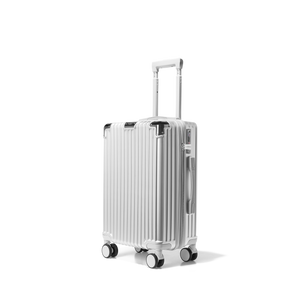
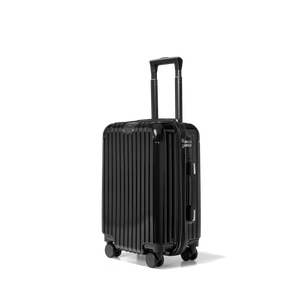
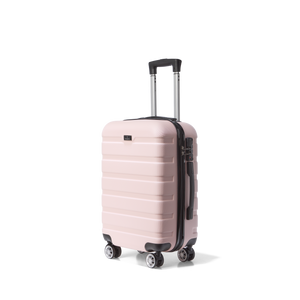
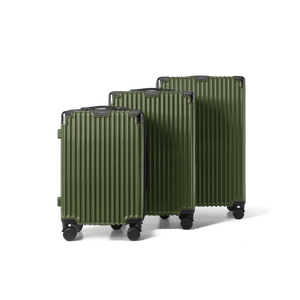

Not sure whether to choose size S, M, L, or XL? For a weekend trip, carry-on suitcases ranging from about 30 to 45 liters are usually sufficient. For a week-long trip, size M is often the best choice; for 1 to 2 weeks, size L; and for long trips, size XL. The right suitcase size depends not only on the length of your trip, but also on the season, your ticket, and how much you actually want to pack.
Below, you’ll quickly see what suitcase sizes are available, how to interpret the length, width, height, and capacity in liters, and what to look out for when it comes to carry-on and checked luggage. This will make it easier for you to choose a suitcase that’s comfortable to travel with, allows for smart packing, and fits your plans.
Which suitcase is right for your trip?
Use this overview as a practical guide. The exact size may vary by brand, model, and airline.
| Size | Overall dimensions | Contents | Often goes well with |
|---|---|---|---|
| S / carry-on luggage | up to about 55 cm tall | 30–45 liters | weekend, city trip, short business trip |
| M | approx. 57–67 cm | 45–70 liters | 5–8 days |
| L | approx. 68–76 cm | 70–95 liters | 1–2 weeks |
| XL | approx. 77–87 cm | 90–120 liters | long trip, winter vacation, family |
Please note: For carry-on luggage, not only the height but also the width and depth are taken into account.
For a weekend or a city trip
For trips of 1 to 3 days, small suitcases are usually sufficient. Pack an extra outfit, toiletries, a charger, and a pair of lightweight shoes. If you're traveling for business or with a laptop, check to see if you're allowed to bring a personal item in addition to your carry-on suitcase.
For 5 to 8 days
For trips of about a week, medium-sized suitcases are often the safest choice. You’ll have enough space for several sets of clothes without having to travel with a large, heavy suitcase. This size is usually too large for carry-on, so it goes in the cargo hold.
For 1 to 2 weeks
If you’re going away for a longer trip, large suitcases are ideal for many travelers. Especially in the winter, or when you’re packing dressy clothes, sneakers, or beach gear, having extra space is nice. Just keep the weight in mind: more space makes it tempting to overpack.
For long trips or a lot of luggage
For long-distance travel, winter sports, or luggage for multiple people, you’ll often end up choosing the XL size. That’s handy if you really need to pack a lot, but this size is less maneuverable and can get heavy more quickly. So choose the XL size only if you really need that extra space.
How to Read Luggage Sizes: Centimeters and Liters
Luggage sizes are usually specified in two ways: by external dimensions in centimeters and by capacity in liters. The external dimensions are important for airline regulations. The liters indicate approximately how much you can pack.
Always measure a suitcase including wheels, handles, and other protruding parts. It’s often the total exterior dimensions that count when it comes to carry-on luggage. Measure the height from the floor to the top, the width from left to right, and the depth from front to back. If you’re comparing multiple suitcases, be sure to check the empty weight as well. A lighter suitcase gives you more space within the allowed weight limit.
Carry-on Luggage and Cabin Bags: This Is Where Things Often Go Wrong
A carry-on suitcase or cabin suitcase is usually size S. Many airlines use 55 x 35 x 25 cm and 7 to 10 kg as guidelines for carry-on luggage, but there is no universal standard. With KLM, Transavia, easyJet, Ryanair, and other airlines, the conditions may vary depending on the ticket, route, and fare.
Therefore, always check the carry-on baggage rules before you book or pack. If you want to be sure your bag will fit under the seat, choose an Underseater suitcase:
- the dimensions, including wheels and handles
- the maximum weight of your carry-on luggage
- or whether a personal item is included
- or if only a small bag is allowed under the seat
- whether your suitcase will fit in a luggage rack
If you're traveling with just carry-on luggage, you'll often save more space by packing smartly than by bringing a larger suitcase. Compact toiletries, lightweight shoes, and a logical organization system can free up a surprising amount of space.
What size suitcase is suitable for 20 kg or 23 kg of checked luggage?
For 20 kg of luggage, many travelers choose a medium or large suitcase that’s about 65 to 75 cm tall. That usually provides enough space without causing you to exceed the weight limit too quickly. For 23 kg, you’ll often end up with a large suitcase that’s about 70 to 77 cm tall, depending on how compact or bulky your belongings are.
Important: Kilograms do not automatically indicate the allowed dimensions. Many airlines also impose a maximum total of approximately 158 cm for the length, width, and height of checked baggage. An extra-large suitcase is therefore not always the best choice. The larger the suitcase, the easier it is to pack too much.
Make a Smart Choice: Pay Attention to These Practical Details, Too
The ideal suitcase size is only truly convenient if the rest of the suitcase is right, too. So be sure to also consider:
- Empty weight—a lightweight suitcase gives you more leeway within the 10, 20, or 23 kg limits.
- Material—hard-shell suitcases offer better protection against impacts, while soft-shell suitcases are sometimes a bit more flexible.
- Maneuverability—four smooth-rolling wheels make walking through airports and train stations much more comfortable.
- Organization—compartments, straps, and a sturdy zipper help you pack more compactly.
- Security and Identification—A TSA lock and a distinctive color or luggage tag make traveling less stressful.
If you want to combine design and ease of use, you’ll usually be best served by a model that’s lightweight, sturdy, and well-organized. That way, you can travel comfortably without having to choose something that’s unnecessarily large or heavy.
Frequently Asked Questions About Suitcase Sizes
What sizes of suitcases are available?
Most suitcases fall into four categories: S for carry-on, M for short vacations, L for longer trips, and XL for long trips or a lot of luggage. Manufacturers sometimes use slightly different size classifications, but this system is the clearest for most travelers.
What are the standard dimensions for carry-on luggage?
There is no fixed global standard, but a commonly used carry-on size is around 55 x 35 x 25 cm. Always check the rules of your airline and ticket, as the weight limit and the allowance for an additional personal item may vary.
How do you measure a suitcase correctly?
Measure the height, width, and depth of the exterior, including wheels and handles. This is especially important for carry-on luggage, because those total dimensions determine whether the suitcase is allowed in the cabin.
How big does a suitcase need to be to hold 20 kg of luggage?
For 20 kg, a suitcase measuring approximately 65 to 75 cm is often a practical choice. If you’re packing winter clothes, athletic shoes, or items for multiple people, a larger size might be more convenient. Also, be sure to check the empty weight of the suitcase itself.
How big can a 23-kg suitcase be?
For 23 kg, many travelers choose a large suitcase measuring approximately 70 to 77 cm. Don’t just look at the volume in liters; also check the maximum external dimensions allowed by your airline. For many airlines, the total dimensions for checked baggage are around 158 cm.
What is the maximum size for checked luggage?
This varies by airline, but many airlines have a maximum external dimension of about 158 cm when you add up the length, width, and height. Also, always check the weight limit, as both rules apply simultaneously.
Still can't decide between two sizes? Don't automatically go for the larger one. A suitcase that's suited to the length of your trip, your packing style, and the airline's rules will almost always be more convenient at the airport.