 Excellent 4.5 | 3,000+ customers
 WebwinkelKeur



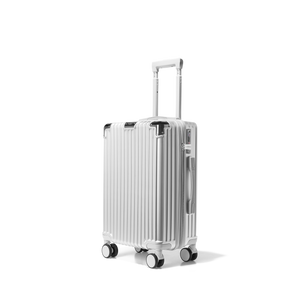
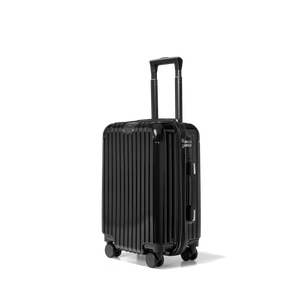
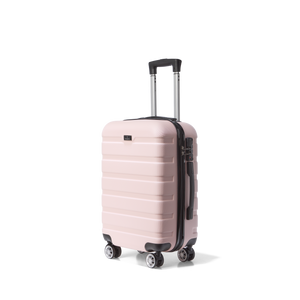
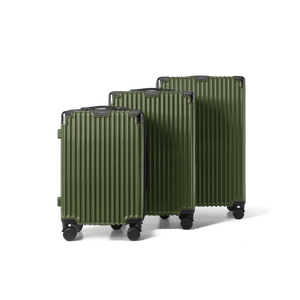

If you're looking for a lightweight suitcase for 20 kg of luggage, a medium-sized model is usually the smartest choice. You'll have more weight left over for your clothes and essentials, the suitcase will be easier to lift, and you'll reduce the risk of exceeding the weight limit when checking in.
As a practical guideline, look for a suitcase that’s about 65 to 75 cm in size, with a capacity of 60 to 80 liters and an empty weight preferably under 3.5 kg. For many trips lasting 1 to 2 weeks, that strikes the perfect balance between packing space, comfort, and a stylish, stress-free start to your trip. Not sure what capacity fits a 20-kg limit? 20-kg suitcase: how many liters do you need?
What size is best for 20 kg of checked luggage?
With a 20-kg baggage limit, it’s not just about how much fits inside, but mainly about how efficiently you use those kilograms. A suitcase that’s unnecessarily heavy on its own immediately takes up space in your weight allowance. A model that’s too big, on the other hand, makes it easier to pack too much.
Important to know: a “20 kg suitcase” is not an official suitcase type. Virtually any sturdy checked luggage suitcase can hold that weight. The real question is how much volume you need, how much the suitcase weighs when empty, and whether its external dimensions comply with your airline’s rules. Also check out the Overview of Suitcase Sizes and Liters for a quick reference.
| Travel situation | Recommended size | Practical Guidelines | Why This Is a Smart Move |
|---|---|---|---|
| 1 to 2 weeks, standard packaging | Medium suitcase | Approx. 65–75 cm and 60–80 liters | Best balance between capacity and weight at 20 kg |
| Long trip, winter clothing, or partly for 2 people | Large suitcase | Approx. 75–85 cm and 90–120 liters | Useful for bulky items, but only a good idea if you really need the extra space |
| Travel Efficiently by Packing Essentials Separately | Medium suitcase + personal bag | Checked luggage for clothes, small bag for essential items | Often more practical than choosing a larger suitcase right away |
20 kg is usually a medium-sized suitcase
For most vacations, medium-sized suitcases for checked luggage are the safest choice. You’ll have plenty of room for outfits, toiletries, and an extra pair of shoes, without the suitcase feeling too bulky. At airports, in taxis, and when storing it at your accommodations, a medium-sized suitcase is often more convenient to use than a really large one.
When a large size actually fits better
Are you traveling to a cold destination, bringing sports gear, or packing partly for your children or partner? If so, large suitcases may be more practical. Keep in mind one important drawback, though: the bigger the suitcase, the more likely you are to actually want to fill it up. With a 20-kg limit, a large suitcase is only a smart choice if your specific travel needs call for it.
How light should the suitcase itself be?
The empty weight is one of the most important factors to consider when traveling with 20 kg of checked luggage. Every kilogram the suitcase itself weighs is one less kilogram you can use for your belongings. A lightweight model therefore immediately gives you more flexibility without having to book extra luggage allowance.
For a medium-sized checked luggage suitcase, about 2.5 to 3.5 kg is a good rule of thumb. Up to about 4 kg can still be acceptable if you get better materials or extra sturdiness in return. If you go significantly over 4 kg, you’ll noticeably reduce your luggage allowance, and the rest of the suitcase will really need to make up for that with quality or functionality.
By the way, extremely light doesn't automatically mean better. A very light model may have thinner panels, lighter wheel assemblies, or a less stable tow bar. The best choice, therefore, isn't the lightest trailer on paper, but a model that combines low weight with solid construction and a comfortable ride.
Hard-shell or soft-shell for checked luggage?
When traveling by air, many travelers choose a hard-shell suitcase because it’s more resistant to bumps, pressure, and splashes. At the same time, the old notion that only soft-shell suitcases are lightweight is now outdated. Modern hard-shell suitcases made of materials such as polypropylene or polycarbonate can be surprisingly lightweight while still feeling sturdy.
When a hard case is a better choice
A hard-shell suitcase is especially useful if you want to better protect your belongings in the cargo hold. Think of shoes, electronics, toiletries, or clothing that you want to keep from getting crushed. The suitcase also retains its shape, which is helpful when stacking and maneuvering it. For many people, a hard-shell suitcase therefore offers a bit more peace of mind during a flight.
When a soft case Might Be a Better Choice
A soft-sided suitcase can be slightly more flexible and sometimes a little lighter. Front pockets are also handy if you want to quickly grab something before or after your flight. If you choose a soft-sided suitcase as checked luggage, pay extra attention to the quality of the zippers, corner protection, and durable material. Fabric is practical, but requires a bit more care during heavy use and in wet conditions.
Here are some other things to keep in mind besides size and weight
A good suitcase for 20 kg of luggage should not only be lightweight, but also comfortable and reliable to travel with. So when comparing models, keep these points in mind:
- Wheels - Four smooth-rolling wheels make for a more comfortable ride through terminals and stations than a system with heavier-rolling wheels.
- Tie Rod - A stable tie rod with minimal play feels more solid right away and makes steering easier.
- Material - Polypropylene and polycarbonate are popular choices when you want to combine lightness and strength.
- Interior Organization - Zippered pockets, dividers, and straps help you pack more compactly and keep everything organized.
- TSA lock - Handy for air travel and a sensible extra security feature for checked luggage.
- Dimensions - Always check your airline's maximum dimensions, as not every airline has exactly the same limits.
Here's how to avoid gaining weight without getting bigger
- Weigh your suitcase at home before you leave, so you don't have to scramble at the airport.
- Use packing cubes or compact organizers to minimize wasted space and keep things organized.
- Pay special attention to heavy items such as shoes, toiletries, jeans, and adapters. The weight can add up quickly with those.
- If your baggage allowance is tight, wear your heaviest coat and shoes during the trip.
- Place heavier items toward the bottom of the suitcase, close to the wheels. This makes it roll more steadily and feel better balanced.
- Bring a personal bag for your laptop, documents, or medication, if your ticket allows it. This will help keep your checked luggage more organized.
In practice, when you’re packing 20 kg, you often don’t need a bigger suitcase—you just need a lighter one with a smarter layout. The biggest benefit often comes from “Smart Packing: 5 Practical Tips.”
Frequently Asked Questions About a Lightweight Suitcase for 20 kg of Luggage
Is a medium-sized suitcase always big enough for 20 kg?
For most trips lasting 1 to 2 weeks, yes. Especially if you pack moderately and don’t bring heavy winter clothing or sports gear, a medium-sized suitcase is usually more than enough. If you’re bringing a lot of shoes, coats, or items for children, a larger size might be more convenient.
Can I bring a large suitcase even with a 20-kg weight limit?
Yes, but only if you really need the extra space. A large suitcase is handy for bulky items or shared luggage, but it also increases the chance that you’ll overpack it. For a fixed 20-kg limit, a medium-sized suitcase is usually more efficient and easier to use.
What is a good empty weight for this type of suitcase?
Aim for about 2.5 to 3.5 kg for a medium-sized checked luggage suitcase. Up to 4 kg is still a viable option if the build quality, wheels, and materials are noticeably better. Above that, the weight of the suitcase itself will really start to factor more heavily into your overall luggage planning.
Are lightweight suitcases less sturdy?
Not necessarily. Durability depends mainly on the material, construction, and finish. A smart, lightweight suitcase can be perfectly suitable for checked luggage, as long as the wheels, handle, zippers, and shell are well-made. A suitcase that’s very lightweight but poorly constructed is less appealing than one that’s lightweight with a good overall design.
Is a very inexpensive budget suitcase a good choice for checked luggage?
For occasional use, a budget model may be sufficient, but be sure to carefully inspect the quality of the wheels, handles, zippers, and shell material. These are the parts that take the brunt of the wear and tear in the cargo hold. A model with slightly better build quality often rolls more smoothly, feels more stable, and remains enjoyable to use for longer.
Are you deciding between 20 kg and 23 kg of luggage?
At 23 kg, a large suitcase makes more sense, especially for longer trips or when traveling through multiple climates. If you usually travel with around 20 kg, a lightweight medium suitcase is often the better choice. You’ll have more control over the total weight and prevent extra space from automatically turning into extra luggage. For longer trips, you can also check out what the best suitcase is for a long-distance trip.
If you want to compare suitcases effectively, always start with three factors: size, empty weight, and material. Then consider the interior layout, wheels, and design. This way, you’ll choose a suitcase that not only looks great but, more importantly, makes traveling more comfortable, practical, and confidence-inspiring.