 Excellent 4.5 | 3,000+ customers
 WebwinkelKeur



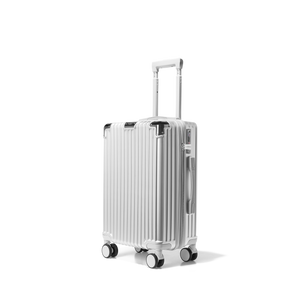
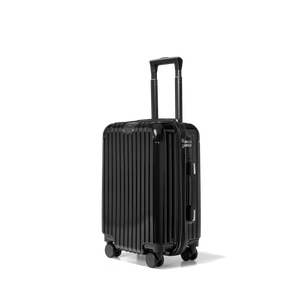
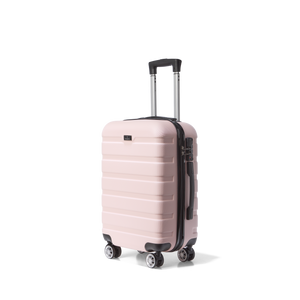
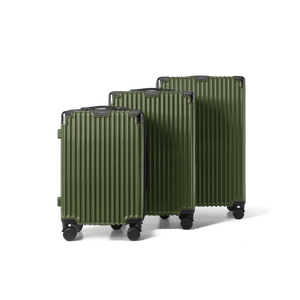

For most air travel, city trips, and trips by train or taxi, a 4-wheel suitcase is the most comfortable choice. You can roll it upright beside you, maneuver it smoothly through crowded terminals, and put less strain on your arm and shoulder. If, on the other hand, you often travel over curbs, cobblestones, or unpaved paths, a 2-wheel suitcase may be more practical. With this decision guide, you can quickly find out which option best suits your route, luggage, and travel style.
When 4 wheels really make a difference
A suitcase with four wheels is often called a spinner. Its main advantage is its maneuverability: you don’t have to pull the suitcase at an angle behind you, but can move it upright in multiple directions. You’ll notice this especially at airports, in hotel lobbies, and at train stations, where you have to turn, stop, and keep moving frequently.
Even if you pack relatively heavily, a 4-wheel suitcase is more comfortable to use. Because the weight is distributed more evenly across the base, you’ll feel less strain on your arm. This provides greater comfort and peace of mind, especially during longer walks or when traveling with an extra bag. If you want to pack more compactly, check out these 5 tips for packing your suitcase smartly. If you’re looking for extra comfort on flat surfaces, carry-on suitcases are often a good choice.
Situations in which 4 wheels are most useful
A 4-wheel suitcase is usually the smartest choice if you frequently travel across smooth floors, through terminals, along train platforms, and on sidewalks. It’s also handy in lines, at check-in, and on public transportation, because you can keep it compactly by your side without having to tilt it over and over again.
When Two Wheels Can Be Smarter
If you often travel over rough terrain, high curbs, or uneven pavement, a 2-wheel suitcase can sometimes be an advantage. The wheels are often slightly recessed into the suitcase, which provides better protection. A 4-wheel suitcase is also more likely to roll away on a slope if you let go of it. So the best choice depends not only on comfort, but mainly on the routes you usually take.
2 wheels or 4 wheels: Here's how it plays out in practice
Still not sure? Then a direct comparison might help. Not every trip has the same requirements, so be sure to consider how you use your suitcase rather than just its appearance or price.
| Component | Suitcase with 2 wheels | 4-Wheel Suitcase |
|---|---|---|
| Exercise | You pull the suitcase diagonally behind you. | You roll the suitcase upright next to or in front of you. |
| Agility | Less agile in tight turns and in crowded conditions. | Very maneuverable, even in tight spaces. |
| Queues | Less practical when stationary. | Useful for check-in, security, and boarding. |
| Rough surface | Often performs better on sidewalks and bumpy paths. | It's more comfortable on flat surfaces than on rough roads. |
| Physical comfort | More strain on the arm and shoulder. | Less strain on the back, especially when carrying heavy luggage. |
| Wheel Protection | Wheels are often a little better integrated. | Wheels often protrude slightly further and require high quality. |
So, generally speaking, opt for 4 wheels if you prioritize comfort, smooth steering, and travel through airports or cities over maximum traction on rough terrain. Opt for 2 wheels instead if you often pull your suitcase over sidewalks, gravel, or uneven roads.
What size suitcase is right for your trip?
Choosing the right size is just as important as the number of wheels. Many people search using terms like “20 kg luggage” or “23 kg suitcase,” but those are airline weight limits, not fixed sizes. How much fits in a suitcase also depends on the material, the interior layout, the empty weight, and what you pack. If you’re unsure whether to choose S, M, or L, check out the Suitcase Size Guide.
Carry-on luggage for 1 to 3 days
For a short trip, a carry-on suitcase is usually sufficient. Think roughly 30 to 45 liters and often a height of around 55 cm. This is convenient for weekend getaways, business trips, and city breaks where you want to move quickly through security. Be sure to always check your airline’s allowed dimensions, as they vary by carrier. If you’re looking for a model that generally fits within the rules, check out the 55x35x25 Carry-On.
Medium-sized, for about 20 kg of luggage
For a trip lasting about a week, a medium-sized suitcase is often the safest choice. Think of one that’s about 60 to 70 cm tall and has a capacity of about 60 to 75 liters. For many travelers, this size is practical if you’re bringing around 20 kg of luggage, without having to travel with a very large suitcase.
Large size for 23 kg of checked baggage
If you’re going away for a longer period or traveling with winter clothing, shoes, or items for multiple people, you’ll likely end up needing a large suitcase measuring about 70 to 80 cm. These typically have a capacity of around 90 to 120 liters. That fits better within the common 23 kg checked baggage limit, but keep in mind: heavy items and a thick hard-shell case can affect how much you can actually pack. For longer vacations, it might also be helpful to check out our suitcase sets.
Always follow your airline's rules
A large suitcase isn't automatically suitable for every flight. Before you leave, check the maximum dimensions, weight, and any applicable fees. This way, you'll avoid surprises at check-in and choose a size that's not only spacious but also practical.
Hard-shell or soft-shell suitcase with 4 wheels?
If you’re specifically looking for a hard-shell suitcase with 4 wheels, you’re usually opting for extra structural rigidity and a sleek look. Hard-shell suitcases are popular for air travel because they help keep fragile items organized and secure. That’s why many travelers choose materials such as polycarbonate, polypropylene, or ABS.
When a hard-shell suitcase with 4 wheels is the right choice
A hard-shell model is a solid choice if you value protection, a modern look, and a suitcase that holds its shape well. Especially at airports and during transfers, a hard-shell spinner often feels sturdy and smooth to roll. Be sure to check the empty weight and the quality of the shell and wheels, because not every hard-shell suitcase performs the same. If you want to compare models and maneuverability, check out the Voyagoux Horizon suitcases.
When a soft-sided suitcase is more convenient
A soft-sided suitcase can be more practical if you like to use the extra exterior pockets or want a little more flexibility when packing. Materials like polyester are often a bit more forgiving when you pack the suitcase to capacity. If you travel mainly by car or want quick access to documents or a jacket, a soft-shell suitcase often offers practical advantages.
What should you look for when buying a suitcase with 4 wheels?
Not every 4-wheel suitcase rolls just as smoothly. With this type of suitcase in particular, the details make a big difference in everyday use. So don't just look at the color or the sale price.
Wheel Quality and Installation
Check to make sure the wheels are securely attached and turn smoothly. Larger or double wheels often provide more stability, especially on longer routes. Also pay attention to how far the wheels protrude. The better the design, the less likely you are to encounter problems when loading, unloading, and transferring.
Tie Rod and Handles
A good suitcase pull handle should feel sturdy, have minimal play, and fit comfortably in your hand. Handles on the top and sides make it much easier to lift the suitcase into overhead compartments, a car, or onto the baggage carousel. Especially with a full suitcase, this isn’t just a minor detail—it’s a matter of everyday convenience.
Layout, Lock, and Weight
Look for a practical interior with zippered pockets, packing straps, and plenty of compartments to organize your belongings. A TSA lock is useful if you’re traveling to or through destinations where baggage screening takes place. Also, check the empty weight: a lightweight suitcase simply gives you more leeway within the airline’s baggage allowance.
Service and Parts
Ideally, you buy a suitcase to use on multiple trips. That’s why it’s a good idea to check whether the manufacturer offers support for parts, advice, or repairs. This isn’t just practical—it’s often more sustainable than buying a completely new suitcase when a wheel, handle, or lock eventually needs attention.
Frequently Asked Questions About 4-Wheel Suitcases
Is a suitcase with 2 or 4 wheels better?
For flat surfaces, airports, train stations, and city trips, a 4-wheel suitcase is usually more comfortable and maneuverable. For rough terrain, curbs, and more hauling, a 2-wheel suitcase may be more practical. So “better” really means: better for your way of traveling.
Which suitcase should I buy for 20 kg of luggage?
For about 20 kg of luggage, many travelers choose a medium-sized suitcase measuring approximately 60 to 70 cm. That size often provides enough space for a trip lasting about a week. Be sure to always check the empty weight of the suitcase and your airline’s exact baggage rules.
How big does your suitcase need to be for 23 kg?
With a 23-kg limit, you’ll often end up with a large checked suitcase measuring about 70 to 80 cm. However, bigger isn’t always better. A very spacious suitcase tempts you to pack more heavily. So look for a good balance between capacity, empty weight, and what you really need.
Are 4-wheelers more vulnerable?
That can happen, especially if the wheels protrude further or the construction is less sturdy. That’s why wheel quality is so important in a 4-wheel suitcase. A well-designed spinner not only rolls more smoothly, but is also often more resistant to heavy use during transfers and baggage handling.
Can I bring a 4-wheeled suitcase as carry-on luggage?
Yes, as long as the total external dimensions—including wheels and handles—meet the airline's requirements. People often forget about the handles. So don't just measure the suitcase itself; measure the entire size as you'll be checking it or taking it on board.
Can you replace the wheels on a suitcase?
With some suitcases, yes. It depends on the design, the availability of parts, and how the wheel is attached. If replacement is possible, it may be more cost-effective and practical than buying a new suitcase. So when making a purchase, be sure to consider service and parts support as well.
What should you do if your suitcase is damaged after a flight?
Report any damage that occurred during transport to the airline or the airport handling agent as soon as possible. In many cases, you must do this immediately or within a short period of time. Take photos, keep your boarding pass and baggage tag, and then follow the carrier’s instructions. This will increase the likelihood of a proper resolution.
If you’d like to narrow down your search after comparing options, be sure to pay close attention to size, wheel quality, empty weight, and material. At Voyagoux , you can browse all travel suitcases in various sizes and colors, featuring practical travel features such as 360-degree wheels and, on select models, a TSA lock. Always check the exact dimensions, weight, and product specifications for each model before making your choice.