
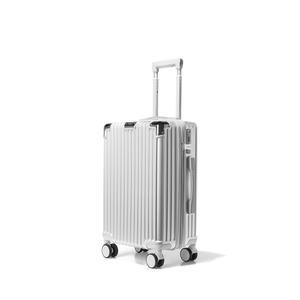
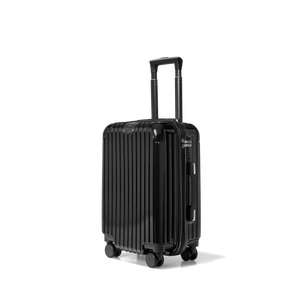
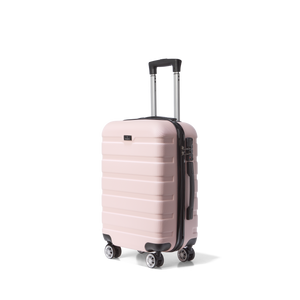
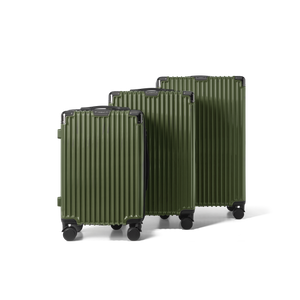

Cleaning your suitcase starts with removing loose dirt. Next, clean the lining and the exterior with a small amount of water and a cleaner suitable for the material. A gentle, spot treatment is a better approach than soaking the entire suitcase or using harsh cleaning agents. Whether you’re taking a Voyagoux suitcase or other travel luggage, be sure to clean the wheels as well and let everything dry completely. That way, your suitcase will be fresh and ready for your next trip.
Check your supplies and get your cleaning items ready
- Start with the material. The manufacturer’s care instructions will determine which treatment is appropriate for your model. A hard-shell or soft-shell suitcase—whether or not it has a special coating—requires its own approach. Also take into account any leather or metal details.
- Get your supplies ready. Use a vacuum cleaner with a furniture nozzle, a soft brush, clean microfiber cloths, lukewarm water, and a mild detergent. Use separate cloths for the interior and the wheels to avoid spreading dirt.
- Test every new product. First, treat a small, inconspicuous area and let it dry to assess the effect on color and shine. Avoid using solvents, bleach, and abrasive products without appropriate material recommendations.
- Do you want to clean a SUITSUIT suitcase? If so, follow SUITSUIT’s official care instructions for your specific model; its appearance alone won’t tell you which cleaning method is appropriate.
Clean the interior and lining step by step
- Empty the suitcase completely. Remove even small items from side pockets and zippered compartments. Open all compartments and loosen any straps so you can reach everything. Remove only the parts that are meant to be taken out. Do not pull off the fixed lining: underneath it are reinforcements and fasteners that should remain in place during cleaning.
- Remove dry debris. Use the upholstery nozzle to vacuum up crumbs, sand, and dust. Work carefully along seams, corners, zipper edges, and the space under the straps. Hold any thin lining in place so it doesn’t get sucked into the nozzle. If you don’t have a vacuum cleaner, use a soft brush to sweep the debris to one side and then remove it from there.
- Remove the permanent lining. Dampen a cloth with lukewarm water and wring it out thoroughly. Treat visible stains with a small amount of diluted mild detergent. Work from the edge of the stain inward, and make sure the lining is only slightly damp. This will limit moisture in the underlayer and prevent a small stain from turning into a large wet spot.
- Remove any soap residue. Use a second, clean cloth that has been lightly dampened with water only. Carefully wipe down the treated area, rinsing the cloth in between. Any remaining detergent will feel stiff after drying and will trap dirt. Then, press excess moisture out of the fabric with a dry cloth, without rubbing too hard.
- Wash loose parts separately. For a removable lining or organizer, check the care label to see whether it’s suitable for hand washing or machine washing. Follow the specified temperature and drying instructions. The washability of one part does not apply to the rest of the suitcase.
Match the exterior to the material
For the exterior, use the approach that best suits the surface. Even with hard-shell suitcases, the material makes a difference.
| Materials | Proper Cleaning | Key Precaution |
|---|---|---|
| ABS, polycarbonate, and polypropylene | Wipe with a soft cloth and mild soapy water according to the care instructions; then wipe with a clean, damp cloth. | Light pressure, without an abrasive sponge. |
| Aluminum | A slightly damp, soft cloth and a cleaning solution suitable for the material, even for large aluminum suitcases. | Do not use abrasives; dry thoroughly. |
| Textiles | First, brush or vacuum, then spot-clean with a small amount of moisture. | Let caked-on mud dry, then gently brush it off. |
| Smooth leather | Apply an appropriate leather cleaner and conditioner using a soft cloth. | Minimize moisture; apply a thin layer. |
| Sweden | Use a suede brush and a product designed for suede. | A special treatment for the roughened texture. |
Don't forget the wheels, handles, and fasteners
- Clear the wheels. Carefully remove hair, threads, and trapped debris. Use a soft brush on the wheel rims, and leave parts assembled unless it is necessary to disassemble them.
- Wipe down contact points. Clean handles, pull rods, and accessible zippers or fasteners with a slightly damp cloth. Do not allow water to get into the mechanisms.
- Dry the metal immediately. Then move the wheels, drawbar, and latches. If something gets stuck due to a bent or broken part, it needs to be repaired rather than cleaned further. For your Voyagoux case, we offer lifetime service for parts, repairs, and advice.
Remove black streaks without damaging the finish
Black streaks are sometimes residue left behind, such as rubber from a conveyor belt. This residue sits on the surface and is different from a scratch that has damaged the surface. Cleaning removes dirt, but it does not repair a damaged coating or a deep groove. If you notice damage after cleaning, see: “Damaged luggage after a flight: what to do.” A streak that remains visible after cleaning therefore does not automatically require a stronger cleaning agent.
If streaks remain on a cleaned hard surface, choose only a cleaning tool that is suitable for that finish. Apply an appropriate cleaner directly to a cloth and treat the streak using light pressure. A soft eraser is not a universal solution: use it only if the maintenance instructions for the surface allow it. Stop as soon as the color or sheen changes.
Magic sponges, toothpaste, and polishing compounds can wear away the top layer. This causes a small black streak to turn into a larger, dull spot. Applying more pressure increases that risk, especially on glossy and coated surfaces.
Also, avoid using heat treatment and household oil for plastic repairs. Oil may temporarily make a scratch less visible, but it does not repair the material. The goal is to clean the surface while preserving its finish, not to remove every sign of wear.
Treat Spilled Liquids and Grease Stains Targeted
Immediately blot up any spilled liquid with a clean, absorbent cloth. Then dab—rather than rub—so you don't spread the stain further or push it deeper into the lining.
| Pollution | Initial treatment | Key limitation |
|---|---|---|
| Shampoo | Gently scoop up any excess shampoo. Blot away the rest using small amounts of clean water and a clean cloth. | Use a small amount of water per treatment; gradually remove soap residue without soaking the underlying layer. |
| Colored beverages, such as wine | Blot with a white cloth, working from the outer edge toward the center. Treat any remaining stains spot-by-spot with a stain remover suitable for the fabric. | Do not rub hard or use heat; always use a clean section of the cloth. |
| Fat or oil | Carefully blot up any excess grease. Treat the remaining area with a degreasing cleaner suitable for the material. | Use a small amount; no need to scrub hard; remove any remaining product with as little moisture as possible. |
Stop the treatment if the original color bleeds, the surface fades, or the fabric changes. Using more of the product or scrubbing longer will only make the damage worse. Harsh mixtures are not a safe next step for a stubborn stain.
When is disinfection appropriate?
Disinfecting is not a necessary standard step after every trip. Simply removing dirt and disinfecting serve different purposes. Cleaning removes dust, grease, and other contaminants. A disinfectant is intended to neutralize certain microorganisms. It is therefore not a substitute for a cloth and an appropriate cleaner.
Targeted additional cleaning may be advisable for a specific hygiene-related reason, such as when a sick travel companion has used your suitcase. In that case, focus on frequently touched areas, such as the carrying handle and the pull-rod grip. Treating the entire interior and exterior does not necessarily provide any additional benefit. Wetting more surfaces also increases the risk of unwanted contact with the lining, adhesive, or mechanisms.
Choose a product that is intended for disinfecting surfaces and is suitable for the specific suitcase material. A hand sanitizer is not automatically a suitable surface cleaner. Even if a product is labeled as intended for hard surfaces, that does not make it suitable for every type of paint or decorative coating. The intended use listed on the label and the material recommendations must match.
Remove visible dirt before disinfecting. Residual grease and dirt can reduce the effectiveness of a disinfectant. Do not use an extra amount as a substitute for this preparation. Also, make sure that any residue from a previous cleaning product has been removed. Do not mix different products together: a combination does not automatically work better and can cause dangerous reactions.
Follow the dosage, contact time, and any post-treatment instructions on the product label. The contact time is the amount of time the product needs to take effect. Therefore, wiping it dry immediately is not appropriate if the label specifies a longer contact time. Conversely, leaving it on longer does not guarantee additional effectiveness. Apply the product only as directed on the label and prevent it from entering openings or mechanisms.
Leather, fabric, and coated surfaces require special care. A product that is suitable for a metal handle may dry out a leather grip or damage a colored lining. Therefore, do not assume that a product suitable for one part is suitable for the entire suitcase. Limit the application to the surface for which the product is intended.
Homemade mixtures containing alcohol or hydrogen peroxide do not make proper application any easier. Without a product label, you lack the information that specifies the application method and contact time for that mixture. A suitable, ready-to-use product provides a clearer starting point. After completing the prescribed post-treatment, let the treated surface dry before touching it again or putting the case away.
Eliminate musty odors at the source
A musty odor will only go away completely if you address the cause. Look for food scraps, leaks, or moisture that has been trapped in the lining for a long time. Clean the affected area and let it dry.
After that, a sealed, odor-absorbing pouch designed for this purpose—containing, for example, activated charcoal—can help. Keep loose powders away from seams and mechanisms. Perfume and fabric fresheners do not remove dirt or mold and can actually cause stains.
Ordinary mustiness is different from visible or recurring mold. In cases of extensive mold growth, an expert assessment is needed—not a one-size-fits-all home remedy that merely masks the odor.
Let your suitcase dry completely
- Open everything up. Leave the case with its compartments open in a well-ventilated area. Set loose parts aside so that air can circulate underneath as well.
- Do not expose your suitcase to direct heat. Keep it away from hair dryers, radiators, and prolonged exposure to direct sunlight. Heat can warp the shell and damage the adhesive, color, or finish.
- Be sure to check hidden areas as well. Pay attention to seams, corners, and the lining under the straps. The outside may feel dry even though there’s still moisture inside. Don’t close the suitcase until those areas are completely dry. If you plan to use a cover afterward, here’s a helpful tip: choose the right size suitcase cover.
Keep your suitcase clean and protected between trips
- Choose a clean, dry storage area. Do not store your suitcase against a damp wall or on a wet floor. Do not place heavy items on top of the suitcase. Prolonged pressure can also put strain on the handles and wheels, especially if the suitcase is tilted.
- Keep dust at bay. A well-fitting suitcase cover helps protect against dust and surface dirt during storage and transport. Choose a cover that fits snugly without putting strain on the handles or wheels. Also, store the cover in a clean, dry place; a damp cover will actually trap moisture inside the suitcase. Not sure which type is best? Read about when a transparent or elastic suitcase cover is the best choice.
- Organize your luggage smartly. With our packing cubes, you can keep clean and worn clothes neatly separated. For example, set aside a separate cube for worn items. Also, pack liquids separately and in leak-proof containers so that a loose cap doesn’t immediately stain the lining.
- Keep maintenance simple and targeted. Give your suitcase a quick once-over while unpacking after every trip. Remove visible dirt, address any leaks immediately, and investigate any strange odors. A clean suitcase doesn’t need a thorough wet cleaning after every trip. This way, you can focus on the areas that need attention without putting unnecessary strain on the rest.
Frequently Asked Questions About Other Cleaning Methods
Can you put your suitcase in the washing machine or in the bathtub?
No, do not put a complete suitcase in the washing machine or submerge it, unless the manufacturer explicitly permits this for your model. A lot of water can also reach reinforcements and adhesive joints that are not meant to get soaked. In the washing machine, mechanical stress and movement are added to this.
Therefore, even a bath without a spin cycle is not a safe standard solution. Water seeps into bearings, grooves, and hollow parts and remains in places where you can’t wipe it away. The outer fabric may already appear dry, while the interior is still damp.
A removable lining with a care label is a separate component. Permission to wash it does not apply to the entire suitcase. To wash it, follow the lining care instructions above and keep loose, washable parts separate from the main structure. This way, you’ll only treat the part that’s designed to be washed.
When should you opt for professional cleaning?
Professional cleaning is a good option for stubborn stains, delicate materials, or extensive and recurring mold. Attempting to treat these issues at home is more likely to cause additional damage than to produce a clean result.
Choose a cleaner with experience working with the specific suitcase material and the construction of travel luggage. A clear description of the treatment, an explanation of the risks to color and finish, and a cost estimate provided in advance will help you make an informed decision. Weigh the expected improvement against the condition and value of the suitcase. Not every set-in stain or damage can be fully restored, even with professional treatment.