Compression packing cubes
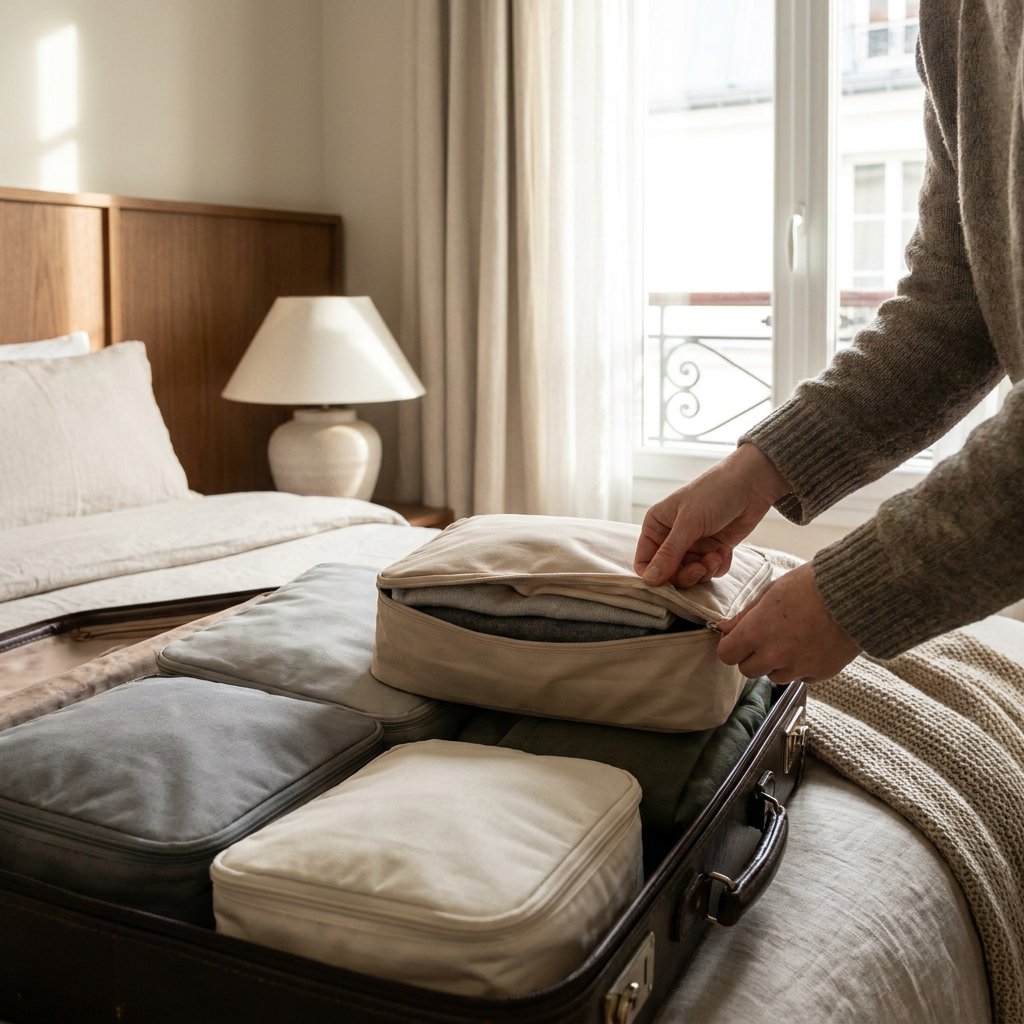
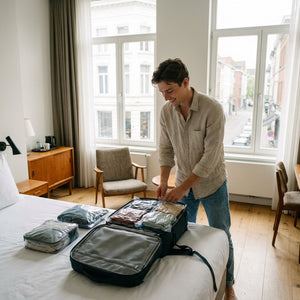
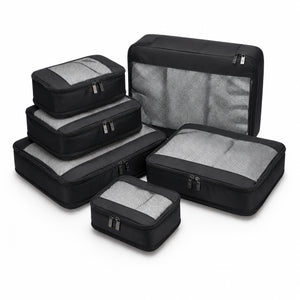
Compression packing cubes are regular packing cubes with an extra zipper. You fill them just like a regular cube: first close the main zipper, then use the second zipper to compress soft clothing. This helps you keep your luggage organized and makes smarter use of the space in your suitcase, rolling suitcase, or backpack.
The key point, however, is that not every item of clothing saves the same amount of space. The biggest space savings usually come from bulky items, such as sweaters, fleece, sportswear, and lightweight jackets. Thin T-shirts, underwear, and other basics naturally take up less space, so the effect is smaller there. That’s why many travelers are mainly looking for practical advice: how exactly does compression work, for which trips is it really worth it, and when is a vacuum solution a better option?
Here's how to get more out of the same suitcase
The difference between regular packing cubes and a compression version lies in the extra zipper around the outside. A regular cube mainly helps you organize your luggage and keep it tidy. A compression cube does that too, but then flattens the filled cube. So you’re not “magically” creating extra space in your suitcase; you’re mainly squeezing air and empty space out of soft clothing. This makes your luggage more compact and often easier to stack, especially when combined with the 5 tips for packing your suitcase smartly.
You’ll notice this benefit most with bulky clothing. Think of thick sweaters, hoodies, workout clothes, pajamas, thermal layers, or a light jacket. These items trap a lot of air, and the compression zipper helps remove some of that air. With thin basics, such as T-shirts, blouses, or underwear, the space savings are more limited. That’s why compression packing cubes usually work best when used selectively: use them for bulky clothing and regular cubes for flat or small items.
The safest way to pack is simple. First, fold or roll your clothes tightly so that the contents are evenly distributed. Then fill the cube to a reasonable level, without letting the fabric bulge. First, fully close the main zipper. Then place the cube on a flat surface, press it down gently with your hand, and slowly close the compression zipper all the way around. By distributing the clothes evenly, you prevent too much tension from building up on one side, making the compression process go more smoothly.
Never force the zipper if the cube is visibly bulging or if fabric gets caught in the zipper. That’s exactly where wear and tear, jammed zippers, and extra strain on the seams occur. An overfilled compression cube is ultimately less convenient than two well-filled cubes, because it’s harder to close, takes longer to retrieve items, and keeps your luggage less organized. So think of compression as a smart way to organize your belongings while saving space—not as a way to pack an unlimited amount of stuff.
You'll notice this right away as you go
The extra space is nice, but once you're on the road, you often notice the improved visibility and convenience even more. These are the benefits that travelers usually notice first.
-
You'll be able to see where everything is more quickly. By sorting clothes into separate cubes by outfit, type of clothing, or family member, you won't have to keep opening your entire suitcase and moving piles of clothes around. That makes the difference between “just grabbing something” and spending minutes searching for that one shirt or those pajamas.
-
Packing and unpacking are noticeably faster. When you arrive at your destination, you don’t have to unpack every individual item of clothing; you simply move one or more cubes to a closet, drawer, or shelf. It works just as well on the return trip: worn clothes, clean clothes, and accessories stay separate, making repacking less of a hassle.
-
Compression cubes are often especially handy for carry-on luggage. Space is limited there, and clothes often have to fit alongside shoes, a toiletry bag, cables, and other essentials. By organizing your clothes into compact sections, your suitcase or carry-on bag stays more organized, and you can better plan which items need to be easily accessible.
-
Your luggage will shift less and stay neater during the trip. Loose clothing tends to sink and shift more easily once your suitcase is standing upright, placed on a rack, or opened multiple times. Cubes keep the contents in place more effectively, so your luggage often still looks organized even halfway through the trip.
-
Clothes often arrive less wrinkled than when you stuff everything in loosely. That’s not because compression completely prevents wrinkles, but because the clothes are packed more evenly and don’t shift around as much. Especially with soft, casual clothing, this can provide a little extra comfort while traveling.
Which type of kit is best for which trip?
Not every trip calls for the same packing strategy. The best setup depends on how long you’ll be away, how many layers you’re bringing, and whether you’re traveling with an under-seat bag, a carry-on, a large suitcase, or a backpack. If in doubt, refer to the exact carry-on dimensions, such as 40x20x25.
| Type of Trip | Handy set | Best Luggage | Why This Works |
|---|---|---|---|
| Short city trip | 2 or 3 smaller cubes | underseat luggage or small carry-on | Enough for a few outfits, underwear, and sleepwear without having to make too many separate compartments. |
| Carry-on Only | 1 medium and 2 small cubes, plus 1 extra for shoes if needed | Trolley | Your clothes stay neatly packed next to your toiletries bag and shoes, while still allowing you to quickly access your essentials. |
| Backpacking Trip | Narrow cubes in various sizes | Backpack | It fits better in vertical luggage and is helpful if you need to open and reorganize it frequently while traveling. |
| Family Vacation | Set with multiple sizes plus an extra cube for laundry | Large suitcase | You can organize your schedule by person or by day, which is especially helpful for longer trips. |
| Trip with warm clothes | 1 or 2 larger compression cubes and a separate cube for shoes | Large suitcase or spacious rolling suitcase | Compression saves the most space, especially with sweaters and jackets. |
The more limited your space is and the more often you have to repack your luggage along the way, the more you’ll usually benefit from compression. For a very short trip, a small set may be enough, while a longer or multi-stage trip will actually benefit from having multiple sizes.
Here's what to look for when comparing brands and sets
When comparing different brands or sets side by side, it’s a good idea to consider ease of use first. After all, the number of pieces or the design doesn’t matter much if the cubes don’t fit well in your luggage.
-
First, consider the size variety of the set. A set with lots of cubes sounds appealing, but it’s only useful if the sizes match what you’re packing. For short trips, a few small and medium-sized cubes are often more practical than one large one. If you’re traveling for a longer period or with family luggage, having multiple sizes is actually more practical.
-
Next, check whether the layout suits your type of luggage. A cube that works well in a large suitcase might be too wide and cumbersome for a compact carry-on trolley. For a backpack, narrower or flatter shapes are often more convenient, while a deep suitcase offers more space for larger cubes. So don’t just compare set names—be sure to compare the actual dimensions.
-
The choice of materials makes a bigger difference while traveling than many travelers realize. Lightweight fabrics help keep the weight of your luggage down. Breathable panels or mesh sections make it easier to see the contents and can help with air circulation. A water-repellent outer fabric can provide extra protection against spills, damp surfaces, or a wet toiletries item nearby.
-
When it comes to compression cubes, zipper quality and craftsmanship are especially important. The second zipper puts more strain on the seams than with regular packing cubes. So look for zippers that glide smoothly, neat stitching, and a design that closes securely even when full. A mediocre zipper might feel fine in the store, but it’s more likely to let you down on the road if you use the cubes frequently.
-
If, for example, you’re looking for Eagle Creek compression cubes or similar sets from other brands, be sure to consider four practical factors: how the compression system works, how much visibility you have into the contents, how easy it is to pack and unpack, and how much weight the set itself adds. These factors usually provide more guidance than just color, appearance, or the promise of “extra space.”
Compression or vacuum: Which is better for your trip?
Both systems help reduce the size of soft items, but they work differently and also feel different to use while on the go.
| Component | Compression Cubes | Vacuum Solution |
|---|---|---|
| How It Works | Reduce the volume with an extra zipper | Removes more air from the contents for maximum compactness |
| Space-Saving | Goes well with soft, voluminous clothing | Often larger, especially when every centimeter counts |
| Convenience on the Go | Quickly open, rearrange, and close again | Not as convenient if you need to access the content frequently |
| Wrinkles | Often more limited than stuffing things in loosely | Greater risk of creases due to stronger compression |
If you’re primarily looking for maximum compression and are also considering a vacuum-sealed solution in the form of a backpack, then VacuPack compression bags might be a logical alternative to regular packing cubes. If you’re mainly looking for organization, the ability to repack quickly, and less hassle while traveling, then compression cubes are usually the more practical choice.
Good to Know
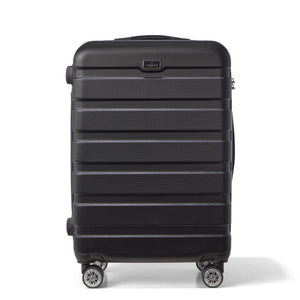
Our hard-shell suitcases have a built-in TSA lock.