
Picking Up Luggage When Transferring: When Is It Necessary?
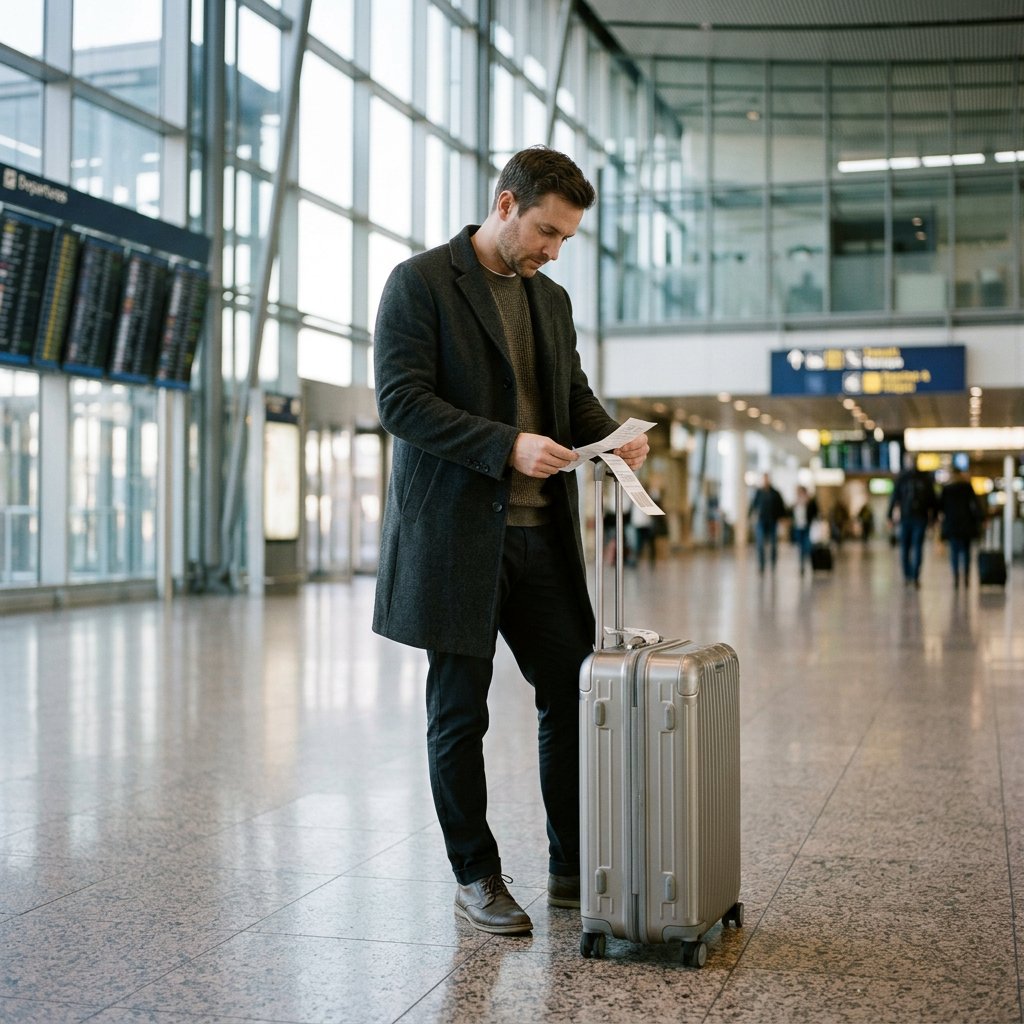
You don’t have to pick up your checked luggage at every layover: the baggage handling procedures for your trip determine what’s required. This article is about checked luggage. You take your carry-on luggage with you to your next flight. A distinctive label helps you spot your suitcase more quickly during a layover; check out our Luggage Tags.
A single ticket or separate flights: here's the difference
A through ticket makes transfer easier, but local customs or airport regulations may require you to check your luggage at an intermediate stop.
| Reservation | Standard Baggage Handling | Possible exception |
|---|---|---|
| One ticket, the same airline | Frequently forwarded | Mandatory pickup due to route requirements or local regulations |
| One ticket, multiple airlines | Often forwarded when collaborating | No suitable baggage arrangement between carriers |
| Individual tickets or self-transfer | Usually, pick it up yourself and check it in again | Forwarding through a separate arrangement |
Even if both individual tickets are issued by the same airline, a connecting flight is not guaranteed.
Before you leave, check where your suitcase is going
- When you check in, ask for confirmation of which airport your suitcase is tagged for. Compare the airport code on the tag with your itinerary.
- Ask if you need to pick up the package along the way and where you'll drop it off afterward. The final destination listed on the label doesn't rule out picking it up at an intermediate location.
- Keep your baggage claim tag and fill out your personal baggage tag; see “Filling Out the Baggage Tag.” If you have any questions, contact the operating airline or check the airport’s official transfer information.
- Will your carry-on luggage be checked into the cargo hold at the gate after all? Make sure to confirm whether you’ll get it back at the plane, on the baggage carousel, or at your final destination.
Here's how to pick up your luggage and check in again
- Follow the signs to the baggage claim area. Find the carousel for your arriving flight and pick up your own suitcase. Check it immediately for any damage; see “Damaged Suitcase After a Flight.”
- Follow the arrival route through any customs checkpoint to the check-in counter, baggage drop-off, or special transfer counter.
- Check your suitcase in again and keep the new baggage tag.
- Go through the required security check and follow the latest gate information.
Be prepared for inspections and travel documents
Passport control is about allowing people to enter a country, customs is about goods, and security screening is about ensuring safe flights. They do not necessarily take place in the same location. Even if you don’t have checked baggage or have a connecting boarding pass, you may still need to go through security screening again. Are you traveling through the United States? There, you’ll often need to retrieve your checked baggage upon your first arrival and check it in again; see Traveling to the U.S.: What to Keep in Mind.
If you pick up your luggage yourself, you may be leaving the transit area. In that case, the entry requirements apply; authorization for airport transit only may not be sufficient. You’ll need a valid passport or accepted form of identification, your boarding pass, and—depending on your route—a visa and proof of your onward travel. The government of the country where you’re transferring publishes the current requirements.
Check to see if you're switching terminals or airports
Compare the departure terminal and airport of your connecting flight with your destination. Walking distances and transportation take time. Changing terminals does not automatically mean you’ll have to pick up your luggage. When changing airports, you’ll usually have to transport your own luggage, unless the carrier confirms otherwise.
Give yourself enough time between flights
The minimum layover time for an offered through connection applies to that connection, not automatically to individual tickets. Be sure to factor in baggage claim wait times, security checks, distances, and transportation. The baggage check-in and boarding deadlines are what matter, not just the departure time.
Would you like to go outside during a long layover? The entry requirements determine whether that’s allowed. Allow plenty of time to return; you remain responsible for any carry-on luggage you have with you.
What do you do if you miss your connection?
In the case of a protected connection, the responsible carrier will generally arrange the rest of your trip in accordance with the applicable terms and conditions. For individual tickets, you’ll usually have to find a solution on your own, unless an additional guarantee or coverage applies.
Contact the airline or booking provider immediately. Ask them where your suitcase is and what will happen to it. Missing a flight can affect the remaining flights in the same booking. Find out what those consequences are before you book an alternative on your own.
Keep your valuables with you
- Pack essential medications, valuables, and some extra clothes in your carry-on luggage. That way, delayed or lost checked luggage will cause less inconvenience. Is your suitcase missing? Lost suitcase: what to do.
- Be sure to check the size and quantity limits set by all airlines to avoid excess baggage fees, which may vary by flight.
- Our carry-on suitcases provide space for the items you want to keep with you while traveling. Choose the size that best fits your flights.
Good to Know
Our hard-shell suitcases have a built-in TSA lock.